
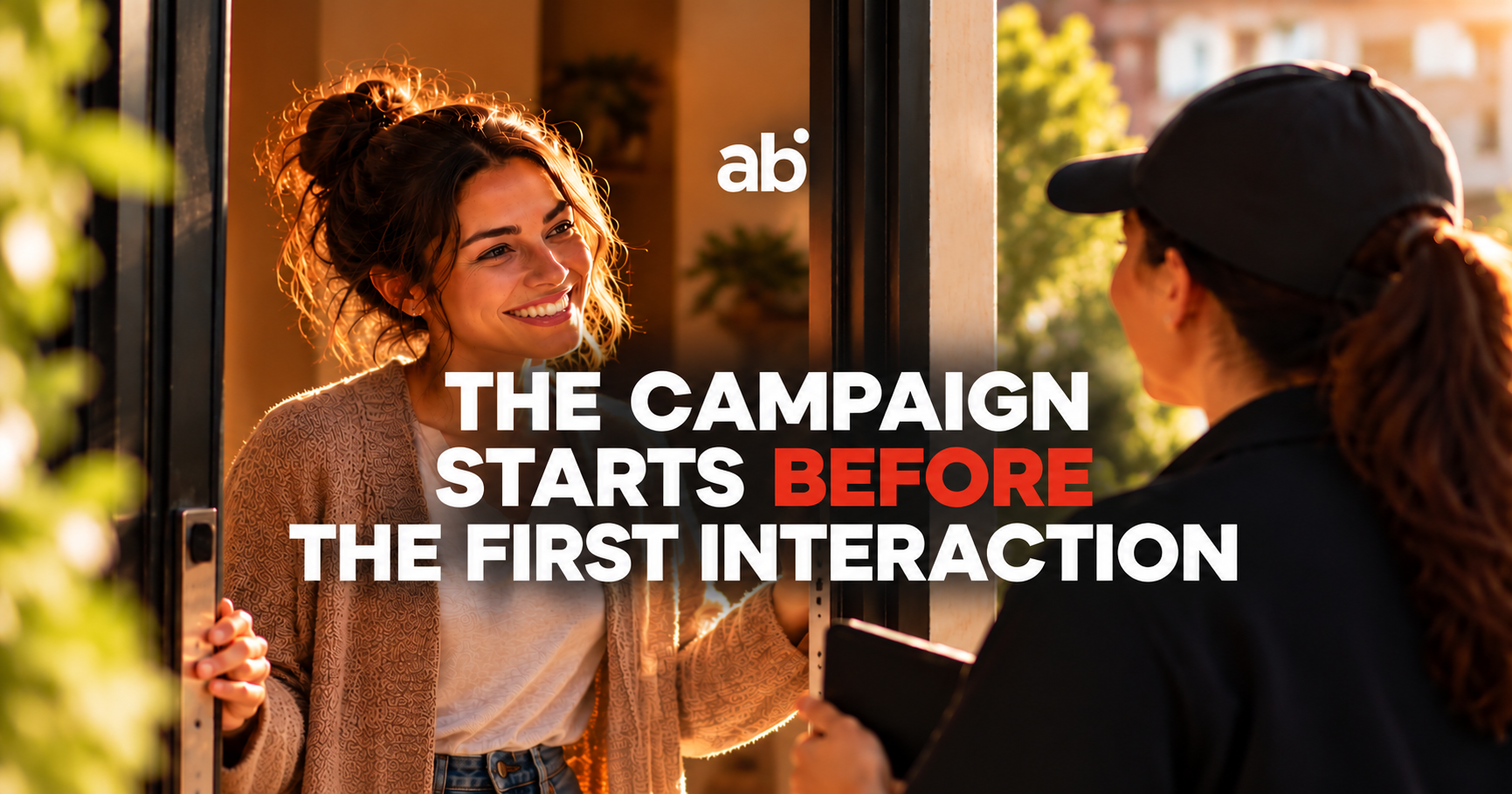
Consumer engagement often begins before the first brand interaction. Marketers spend months refining a campaign concept, visual identity, and promotional experience. But what if the biggest obstacle is something much simpler: people are not ready to participate?
We tend to measure what happens during a campaign. How many people attended? How many samples were distributed? How many consumers took action? Yet the decision to engage is often made earlier, in a moment that rarely appears in the creative presentation.
Sometimes the smartest marketing idea is not another attention-grabbing execution. It is removing the small barrier standing between a person and the experience.
Why Consumer Engagement Begins Before the First Interaction
Imagine an unexpected knock at your door. You are not expecting visitors, and you do not know who is outside. Even if the person has something complimentary to offer, you might choose not to answer.
Now imagine receiving a short message the day before. It explains who will be visiting, why they are coming, and what to expect. The offer is the same, but the situation feels different.
The difference is not the product. It is the context.
People make quick judgments about whether an interaction is worth their time and whether it feels comfortable or trustworthy. Good marketing anticipates those judgments rather than assuming that a compelling offer will automatically overcome them.
What a Coca-Cola Sampling Campaign Taught Us About the First Touchpoint
We encountered this challenge while working on a household sampling campaign for Coca-Cola. The activation involved delivering complimentary products directly to consumers’ homes. But there was a practical question behind the creative concept: how do you encourage people to open the door to a visit they were not expecting?
Our solution was to introduce an additional communication touchpoint before the sampling team arrived: a doorhanger informing households about the upcoming visit.
It was a simple idea, but it addressed a real behavioral barrier. Instead of asking residents to respond to a completely unexpected interaction, the campaign gave them context in advance.
That advance notice was designed to improve the door-opening rate and make the interaction feel more familiar. We later saw the approach adopted by the broader Coca-Cola team.
The lesson was bigger than the doorhanger itself: sometimes the most important part of an activation is the moment that prepares someone for it.
Explore our Coca-Cola household sampling project to see the activation behind this example.
The Hidden Barriers Behind Experiential Marketing
Consider a beautifully designed brand activation in a shopping center. The stand looks impressive, the staff are prepared, and the product is appealing. But visitors walk past because they do not understand what is happening or what is expected of them.
The problem may not be creativity. It may be friction.
Consumer engagement depends on details that are easy to overlook: whether the invitation is clear, whether the timing feels right, whether participation requires too much effort, and whether the consumer understands the value of taking part.
A campaign can look excellent in photographs and still miss opportunities to connect with people. That is why planning an activation should involve more than mapping what the brand will say or show. We also need to map what the consumer might hesitate to do.
How Leading Brands Remove Barriers Before the Experience
This principle extends far beyond promotional campaigns. Some of the world’s most recognizable brands are designing experiences that address consumer hesitation before the main interaction even begins.
Take IKEA, for example. Buying furniture involves uncertainty. Will the sofa fit? Will the color work? How will it look in the room?
Instead of leaving customers to imagine the result, IKEA introduced IKEA Kreativ, a digital experience that allows consumers to visualize furniture in their own spaces.
The idea is simple: help people feel more confident before making a purchasing decision.
Starbucks approaches the same principle from a different perspective.
Through its Mobile Order & Pay experience, customers can place orders before arriving at participating locations, reducing the time and effort involved in the purchasing process.
Different industries. Different consumer journeys. But a similar marketing principle.
The easier and more predictable an interaction feels, the fewer reasons consumers have to avoid it.
In our Coca-Cola sampling campaign, the challenge was uncertainty about an unexpected visit. For IKEA, it is uncertainty about how furniture will look at home. For Starbucks, it is the convenience of ordering and collecting a purchase.
The solutions are different, but they begin with the same question:
What might prevent the consumer from taking the next step?